Mahjong Crush: Tile Match
reuploadCasual
4.8265.00 Reviews
- Version
- 1.0.2
- Installs
- 100.00K
- Age Rating
- Mature 17+
Screenshots
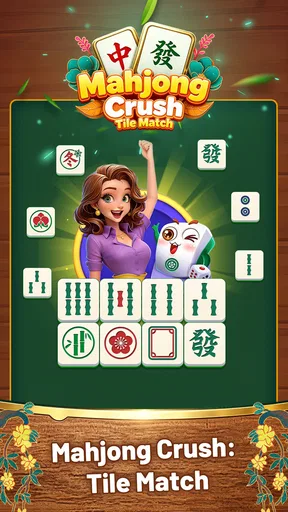
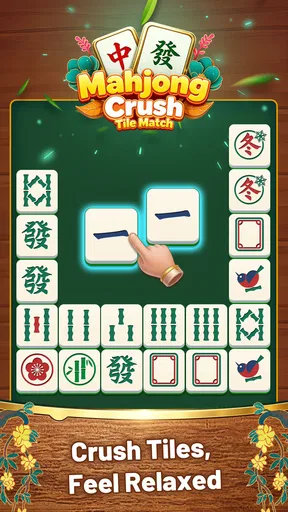
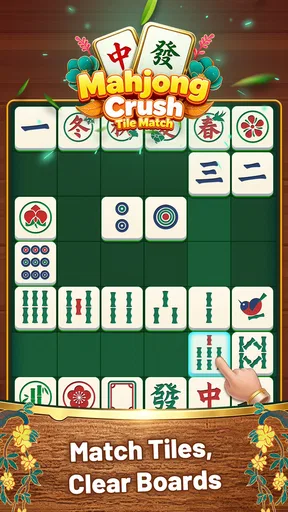
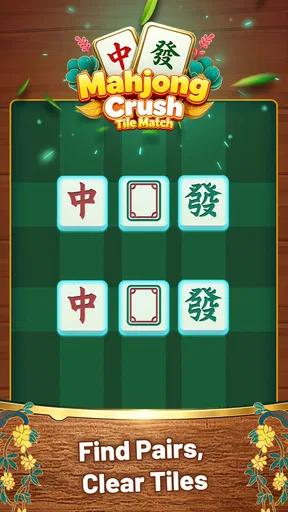
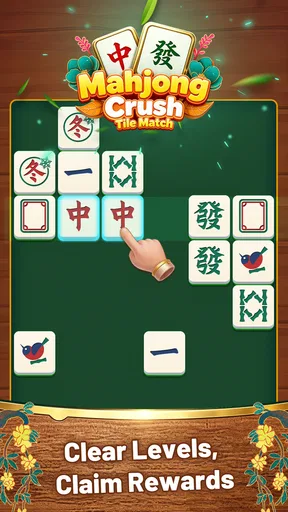
Our Review of Mahjong Crush: Tile Match
 Analysis by Appyee
Mahjong Crush: Tile Match is the kind of casual game I open when I want a quiet puzzle session rather than a demanding challenge. Its central idea is easy to understand: I slide tiles, look for matching suits, and work toward clearing the board. That simplicity gives it an inviting first impression, but the experience depends heavily on how carefully I read the layout. A move that looks harmless can change the available paths, so the game rewards a little planning even when a round feels relaxed.
I found the strongest appeal in that balance between immediate accessibility and small tactical decisions. I do not need to learn a complicated control system before playing, and a short session can fit naturally into a coffee break or a few minutes before bed. At the same time, I cannot treat every tile as disposable. The board gradually asks me to notice patterns, preserve useful options, and avoid clearing a convenient match if it leaves the remaining arrangement awkward.
This is a free casual game from reupload, listed for players aged Mature 17+. It has a 4.8 average from around 13 thousand ratings, with more than 100 thousand installs. Those figures suggest that the straightforward tile format has found an audience, but they do not replace personal taste. I would recommend trying it if you enjoy visual matching and measured puzzle play; I would be more cautious if you want a story, competitive depth, or a highly demanding strategy game.
How the presentation sets the mood
I find that the presentation’s main job is to make each board feel readable rather than grand, and that restraint suits a puzzle built on careful looking. I’d use the first moments of a session to scan the layout and settle into its pace, instead of treating the familiar tiles as a signal to tap quickly. That small shift helps the game feel more considered, especially when I’m playing in a brief, quiet break.
A clean opening that gets to the puzzle quickly
My first impression was shaped by how little stands between opening the game and understanding its purpose. Mahjong Crush: Tile Match does not need a long explanation to communicate its basic loop. The board is the focus, and the familiar tile imagery makes the objective readable without turning the opening into a tutorial-heavy experience. That is useful for casual players who want to start immediately, especially anyone who is already comfortable with matching games.
The visual language also supports the game’s compact nature. Tiles are not merely obstacles to remove; their symbols give the board its identity and make each decision feel more deliberate than matching anonymous colored blocks. I found myself scanning the arrangement in groups, first looking for obvious pairs and then considering how one cleared section might expose another. The setting stays close to the puzzle instead of competing with it, which helps the game maintain a focused mood.
That focus is a strength, although it comes with a trade-off. Players who expect a richly developed mahjong setting, a narrative journey, or a large collection of themed activities may find the presentation restrained. The game’s attraction comes from the act of reading and clearing the board, not from an elaborate world wrapped around it. In my view, that is the right choice for quick sessions, but it means the puzzle itself must remain satisfying over time.
Art direction that supports recognition
The tile-based art direction works best when it helps me identify relationships at a glance. In a matching puzzle, visual clarity is not decoration; it directly affects whether the game feels fair. I need to distinguish symbols quickly, especially when several tiles are visible at once. The Mahjong-inspired look gives the board a more tactile personality than a plain grid, while the simple structure keeps attention on possible matches.
One useful habit is to pause before making the first move instead of immediately selecting the most obvious pair. I look across the whole board, note which suits appear in several places, and try to imagine what clearing one area will reveal. This small delay makes the art direction work as part of the strategy: the symbols become a visual map, not just attractive pieces. It is a subtle difference, but it is what turns a simple matching board into something I can study.
The design is also approachable for players who prefer low-pressure games. There is no need to memorize a large rule set, and the visual theme gives the experience a recognizable identity without making it feel inaccessible. However, anyone with difficulty distinguishing small symbols may need to play on a device with a comfortable screen size. A compact phone can make a busy board harder to read, so the best experience depends partly on display space and personal vision.
Sound and rhythm without taking over
The game’s mood is most effective when its audio remains subordinate to the board. For me, a tile puzzle works better when sound reinforces a move instead of trying to create excitement that the mechanics do not support. The matching action should feel clear, the successful removal should provide a sense of completion, and the overall rhythm should leave room for concentration.
That makes Mahjong Crush: Tile Match suitable for situations where I want something gentle in the background of my day. I can imagine playing during a short commute while waiting, during a quiet break, or in the evening when I do not want a game that demands constant reactions. The pacing comes from my decisions rather than from rapid timers or action-heavy encounters. I can examine the board, make a move, and reassess without feeling pushed into a frantic sequence.
There is a practical trade-off here. A calm rhythm is helpful for focus, but it may feel too restrained for players who need frequent surprises or a strong sense of escalation. If your ideal casual game is built around fast rounds, dramatic effects, or energetic competition, this one may seem understated. I see that as a matter of fit rather than a flaw: the atmosphere is coherent because the presentation does not promise more intensity than the tile-clearing mechanics can deliver.
Why the pacing matters to the mechanics
The slow, readable pace gives me time to think about consequences. In many matching games, the first few actions are almost automatic, but the later choices become more important because the remaining layout offers fewer convenient combinations. Here, the relaxed rhythm encourages me to switch from quick recognition to deliberate planning. I can use the early part of a board to understand its structure, then become more selective when the easy matches disappear.
A useful approach is to prioritize moves that open access to crowded areas rather than simply taking the pair that is easiest to spot. That does not guarantee a perfect result, but it reduces the chance of leaving useful tiles buried behind an inconvenient arrangement. I also try to remember which suits have already appeared in several locations. This creates a mental shortlist of future possibilities and prevents me from treating every visible match as equally valuable.
This is one of the game’s less obvious strengths: the presentation gives the puzzle enough breathing room for observation to matter. It does not need complex systems to create tension. The tension comes from seeing a board become less flexible after each choice. Players who enjoy that kind of quiet calculation will probably appreciate the pacing more than players who only want effortless matching.
Where the game fits among casual alternatives
Compared with a basic color-matching game, this title feels more contemplative because the tile symbols and board arrangement ask me to inspect the whole field. Compared with a traditional mahjong solitaire presentation, its appeal is more immediate and casual: I can approach the board as a quick matching challenge without needing to study a deep rule system. It sits between those two familiar styles, using the recognizable mahjong-inspired vocabulary while keeping the interaction simple.
That middle position is important when deciding whether to install it. If you enjoy match-three games mainly for chain reactions, boosters, and explosive feedback, you may prefer a more action-oriented alternative. If you want a full mahjong simulation with detailed rules, formal scoring, or a stronger traditional structure, a dedicated mahjong app may suit you better. Mahjong Crush: Tile Match is better for someone who values a clean board, recognizable suits, and a calm sequence of small choices.
I also think it works well as a companion game rather than a primary gaming hobby. I would not choose it when I want a long narrative or a competitive goal to chase. I would choose it when I have enough attention for a puzzle but not enough time or energy for something expansive. That distinction helps set realistic expectations and explains why the game can be enjoyable without offering a huge range of systems.
Everyday use: a short break that still feels meaningful
One realistic use case is a ten-minute pause between tasks. I can open the game, inspect a board, make a few careful matches, and stop without needing to remember a complicated storyline or coordinate with other players. That makes it easier to fit into an uneven schedule. The session can be brief, but the decisions still give the break a little structure instead of making it feel like empty scrolling.
I would use a different approach late at night. Rather than rushing through obvious pairs, I would lower the pace and treat the board almost like a visual wind-down exercise. The suits provide something specific to focus on, while the absence of demanding action keeps the mood controlled. Players should still consider their own sensitivity to screen use and audio, but the game’s general design is more compatible with quiet play than with high-pressure sessions.
For older players or anyone returning to games after a long break, the accessible rules are a clear advantage. The board communicates the task visually, and the controls do not require fast reflexes. The Mature 17+ content rating is worth noticing before installation, particularly for households choosing games for younger players. I would check the rating on the intended device and avoid assuming that a simple puzzle is automatically suitable for every age group.
Small decisions that improve a session
My first practical tip is to avoid clearing a match solely because it is available. I scan for pairs that affect the shape of the board and prefer moves that create more visibility or preserve several future options. This is especially useful once the obvious matches have been removed. The goal is not to make every move perfect; it is to keep the board flexible for as long as possible.
My second tip is to divide attention between the current pair and the next two possibilities. After finding a match, I immediately look at what its removal changes. Does it expose a new symbol? Does it make another pair harder to reach? This habit turns the game from a sequence of isolated taps into a rolling plan. It also helps prevent the common mistake of focusing so narrowly on one pair that I miss a better route elsewhere.
My third tip is to use the game as a visual concentration exercise rather than a test of speed. I make a deliberate first pass over the board, group similar suits mentally, and only then begin clearing. This works particularly well when I am tired or distracted because it gives the session a simple routine. The trade-off is that it makes play slower, but the slower pace is exactly what makes the puzzle feel more controlled.
Limitations that affect the recommendation
The biggest limitation is also the game’s defining simplicity. The core loop is clear and approachable, but players who need constant novelty may eventually want more variety than a tile-clearing format can provide. I would not recommend it as the only game on a device for someone who quickly loses interest without story chapters, character progression, or competitive goals.
The visual focus can create another point of friction. A board that is easy to read on a larger screen may feel cramped on a smaller phone, particularly when several similar symbols sit close together. That is not a problem unique to this game, but it matters here because recognition is the main skill. Before judging the puzzle too harshly, I would try a comfortable brightness level, hold the device at a sensible distance, and give myself time to inspect the layout rather than tapping impulsively.
The game is free, which lowers the barrier to trying it, and its current version is 1.0.2. I would still approach it with the expectations appropriate for a focused casual title: the value comes from the repeated quality of its board-clearing loop, not from a promise of a large entertainment package. It supports Android devices running version 6.0 or later, so compatibility is straightforward for many older phones, though actual comfort will depend on screen size and performance.
Who should play it and who should skip it
I think this is a good match for players who like calm visual puzzles, mahjong-inspired tiles, and sessions that can begin and end without ceremony. It is especially suitable for someone who enjoys looking ahead by a move or two but does not want a complex strategy interface. The gentle pacing also makes it a reasonable choice for short breaks, quiet evenings, and moments when a more demanding game would be tiring.
I would steer competitive players toward another option if they need rankings, direct opponents, or a strong performance loop. I would also suggest a richer mahjong alternative to anyone seeking traditional rules or a more elaborate cultural setting. Likewise, players who mainly enjoy chain reactions and flashy feedback may find this board-focused design too measured. The game knows what it wants to be, and the right recommendation depends on whether that mood matches yours.
My final view of the atmosphere and play
After spending time with it, I see Mahjong Crush: Tile Match as a compact puzzle built around visual calm and modest tactical pressure. The art direction gives the board a recognizable personality, the sound and rhythm support concentration, and the pacing lets the mechanics breathe. None of those elements tries to overwhelm the others. The result is a coherent mood in which the main pleasure comes from noticing a good match and understanding why it is the right move.
The best reason to try it is its balance between easy entry and thoughtful board reading. I can start playing almost immediately, yet I still have something to consider once the simplest pairs are gone. That balance will not satisfy everyone, especially people looking for a deep progression system or constant excitement, but it gives the game a clear purpose.
My recommendation is positive for casual puzzle fans who want a free, low-pressure tile experience and are comfortable with its Mature 17+ rating. I would install it as a dependable short-session game, not as a replacement for a full mahjong simulator or a feature-heavy matching adventure. When I want a quiet board to study, a few careful moves, and a clean stopping point, this is the kind of game I would gladly keep nearby.
Verdict
Strengths of Mahjong Crush: Tile Match
- Easy-to-learn matching rules suit both casual and experienced players.
- Short levels make it convenient for quick gaming sessions.
- Bright tile designs make symbols easy to recognize.
- Offline play is useful when you have no internet connection.
- Progressive challenges help keep the gameplay engaging over time.
Limitations of Mahjong Crush: Tile Match
- Some levels may feel repetitive after extended play.
- Later stages can become difficult without careful tile planning.
- Hints or boosters may be limited unless you watch ads or buy them.
- Frequent ads can interrupt the flow between completed levels.
- Small tile details may be harder to see on compact phone screens.
Similar Picks in This Category
View All
My Talking Angela
Outfit7 Limited4.2

My Talking Tom
Outfit7 Limited4.3

Pou
Zakeh4.2

My Talking Tom 2: Pet Game
Outfit7 Limited4.3

Candy Crush Saga
King4.6

Bridge Race
Supersonic Studios LTD4.1
Frequently Asked Questions
What is Mahjong Crush: Tile Match, and how is it played?
Mahjong Crush: Tile Match is a casual puzzle game based on the classic tile-matching concept. Your objective is to find and pair identical, available tiles until the board is cleared. Tiles can usually be selected only when they are not blocked by others and have an open side. Each level introduces a different layout, so planning your moves is important rather than matching tiles randomly.
Is Mahjong Crush: Tile Match suitable for beginners?
Yes, the game is generally easy to understand and suitable for beginners. The basic matching rules are introduced quickly, and the early stages typically provide a comfortable way to learn how blocked and available tiles work. As you progress, boards may become more complicated and require better attention, memory, and timing. It can be enjoyed by both casual players and fans of traditional tile puzzles.
Does Mahjong Crush: Tile Match require an internet connection?
Many tile-matching levels can often be played without a constant internet connection, which makes the game convenient for travel or short offline sessions. However, certain features may depend on connectivity, including advertisements, cloud saving, events, leaderboards, rewards, or in-app purchases. Availability can vary by device and version, so it is best to check the game’s current store description and test the features you intend to use.
Are there hints, shuffles, or other assistance tools in the game?
Mahjong Crush: Tile Match may provide helpful tools such as hints, tile shuffles, undo options, or extra chances, depending on the level and current version. These features can be useful when no obvious pair is available, but they may be limited or connected to rewards, advertisements, or in-game currency. Players should use them strategically, because choosing the wrong pair early can make a board more difficult to complete.
Does Mahjong Crush: Tile Match contain advertisements or in-app purchases?
The game may include advertisements and optional in-app purchases, as is common with free-to-download puzzle titles. Ads can appear between levels or when you request bonus rewards, while purchases may offer additional hints, remove advertising, or provide other game resources. Before downloading, review the app-store listing and permissions, and use device purchase restrictions if children will be playing on the device.
Play our best games!


